Why the branded content people choose borrows a story, a publisher or a format they already love
In November 2015, a listener left a five-star review on a podcast's iTunes page telling its makers to start a Kickstarter and turn the show into a movie. The show was "The Message," an eight-episode sci-fi thriller, and in an unprecedented fashion, the company behind it was GE — better known for jet engines, power turbines and medical scanners than for radio drama.
The show also arrived when big brands paying for podcasts was still new enough to be controversial, and no branded podcast had ever broken into the iTunes top ten. Within weeks, "The Message" sat at #1, on the same chart as every network and indie show.
Fan reactions like that are rarer than the volume of branded content suggests, which is what makes these examples worth studying. Kantar's 2026 research found that only 27% of creator content strongly ties back to the brand that paid for it, so most of the time, the sponsor doesn't stick with the audience.
At Giant Spoon, we've worked on branded content where the brand stuck, and we've noticed the strongest examples share one trait. The audience would choose them with no ad attached. Our gut check in a creative review is whether someone would text the work to a friend with “you have to see this.” People pass along a great episode or a sharp magazine feature all the time, and the brand that made it travels with it.
Here, we break down four of them: MassMutual's "Stay Ready" films with three women athletes, A Diamond Is Forever's co-created issue of The Cut, the digital relaunch of American Express's Departures magazine, and GE's "The Message".
Each one came down to a single decision about what to borrow from the audience, whether a story they already followed, a publisher they already trusted or a format they already used. If you're weighing where your next branded content budget goes, those three decisions are a good place to start.
Key takeaways
- The branded content audiences seek out tends to borrow something they already have: a story they follow, a publisher they trust or a format they use every day.
- Publisher partnerships carry real weight. Nielsen's 2016 study found branded content distributed with a publisher drove 50% higher brand lift, on average, than content brands published alone.
- Branded content keeps working after the media flight ends, so measure it over a longer window with recall, time spent and returning subscribers.
What is branded content?
Branded content is entertainment or editorial that a brand pays for and helps shape, built so the audience gets something worth their time before the brand asks for anything.
Podcast series, magazine issues and short films all count. People seek it out the same way they'd pick a show or open a favorite newsletter, which is why it tends to stay with them.
In a 2016 study of more than 100 examples, Nielsen found branded content drove 86% brand recall, compared with 65% for pre-roll ads from the same brands.
4 branded content examples, grouped by what each one borrowed
Borrow a story the audience already follows
People spend a lot of time with women's sports. Nielsen counted 46 billion minutes of women's sports watched in the US in 2025, across basketball, tennis, soccer and more. Nielsen's earlier branded content research also found that viewers who described a video as "for people like me" were the most likely to want more of it.
A story with a built-in audience gives a brand a head start on both counts.
MassMutual turns game-day prep into a money story
MassMutual wanted to help women feel more confident about their financial futures. For "Stay Ready," we built the campaign around a part of sports fans rarely see, the preparation that happens long before game day. The films follow LSU guard Flau'jae Johnson, tennis champion Madison Keys and soccer star Christen Press through night practices, rain-soaked training sessions and an ice bath, with Johnson narrating.
The three athletes sit at different points in their careers. Johnson was still in college while building a music career, Keys had won her first Grand Slam at the 2025 Australian Open weeks before launch, and Press was a World Cup winner heading into a new NWSL season. That range shows that staying prepared matters at every phase of a career, and of a financial life. The message to viewers is that financial confidence comes from the same kind of steady preparation, with the right team behind you.
The campaign ran across TV, digital, radio, print and social during both the men's and women's tournaments. Three New York Times cover wraps gave each athlete her own front page, and in late March, the hero film topped DAVID's chart of the most emotionally engaging March Madness ads of 2025. Fans came for athletes they followed, and MassMutual's message reached them inside a story they cared about.
Borrow trust from a publisher readers already love
Nielsen's 2016 study also found that branded content distributed with a publisher drove 50% higher brand lift, on average, than content brands put out on their own. We've seen that trust work two ways. A brand can partner with a publisher whose readers listen closely, or it can bring back a publication its own customers know by heart.
"A Diamond Is Forever" borrows The Cut's eye
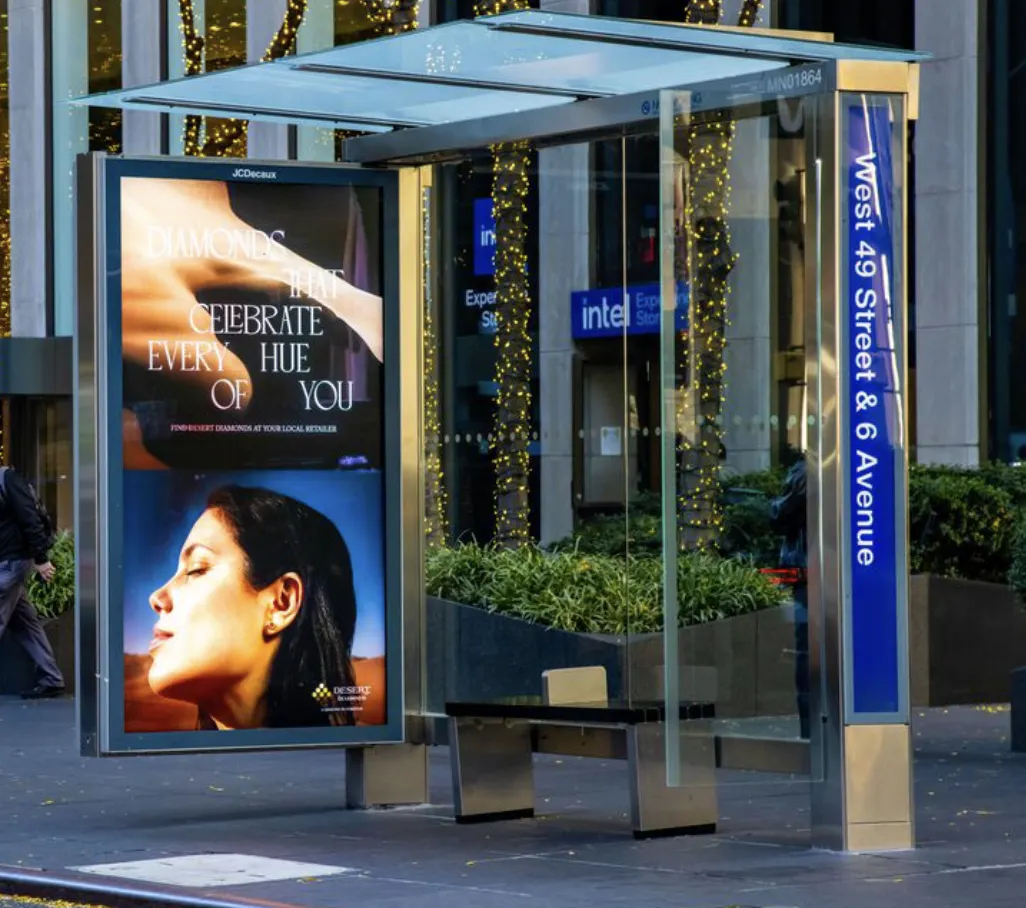
The Cut is New York magazine's site for fashion, beauty and culture, read by an affluent, style-conscious millennial audience. For A Diamond Is Forever's 2025 holiday campaign, we partnered with The Cut on a co-created digital issue about natural luxury, with the brand's creative running throughout. The Cut had published only two special digital issues that year, which made this the third. The issue tied into Shop Natural Day on December 6, a day designed to boost natural diamond sales during the holidays, and the partnership extended into natural diamond gift guides on Eater and a takeover of The Strategist's daily newsletter.
Diamonds are a taste-driven purchase, and The Cut's readers value timeless luxury. Showing up in a publication they trust for taste put the brand's story in front of them with an editor's credibility attached. In brand collaboration examples like this one, the partner's editorial voice does a lot of the persuading. Our job was to fit the natural diamond story inside that voice, so the issue read like The Cut first and a campaign second.
If you’re curious on how The Cut’s team takes a brand brief from rough to finish, we break down how Vox Creative builds co-created campaign here.
Departures brings a 40-year-old magazine to the inbox

Starting in 1984, American Express mailed Departures, a luxury travel and lifestyle magazine, to its Platinum and Centurion cardholders seven times a year, with more than a million copies per issue. When Amex moved it to digital in 2021, we helped relaunch it around a weekly newsletter, a members-only site covering travel, food, style, wellness and the arts, and several print editions for readers who still wanted a magazine on the coffee table.
Card members had known the Departures name for decades, so the relaunch started with trust in place. The weekly newsletter met them in an inbox they were checking anyway, and it went on to earn a Webby nomination in 2022.
Borrow a format the audience already uses
GE writes a monster made of sound
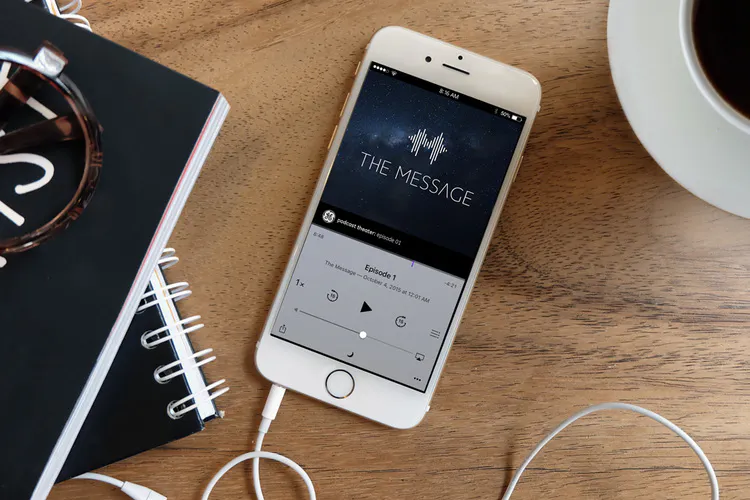
By 2015, Serial had made story-driven podcasts a habit for millions of listeners, and GE had its own history with the format. In the 1950s, it sponsored General Electric Theater, an anthology series hosted by Ronald Reagan. "The Message" brought that idea into the podcast era. Playwright Mac Rogers wrote the series after learning that GE was working on sound-based medical treatments, which gave him his villain. If a sound could heal someone, another sound might make them sick. GE's technology became the engine of the plot.
As part of our decade-plus partnership with GE, we helped launch the show. It debuted at #47 on iTunes, became the first branded podcast to break the top ten, then reached #1, and listeners downloaded it more than 4 million times. GE's chief creative officer at the time, Andy Goldberg, compared it to "GE creating a TV show." Listeners treated it like one, because it arrived in a format they used every day. They subscribed in the same app, next to the shows they followed.
How do you measure the long-term impact of branded content?
Branded content usually keeps working after the media flight ends. MassMutual launched "Stay Ready" around March Madness with more elements planned for the rest of the year, and GE followed "The Message" with a second series, LifeAfter, in 2016. From our experience, that means the measurement window should stretch to match, and the metrics should cover how people feel about the brand alongside who clicked. The number we bring to every branded content readout is how many people came back without a reminder.
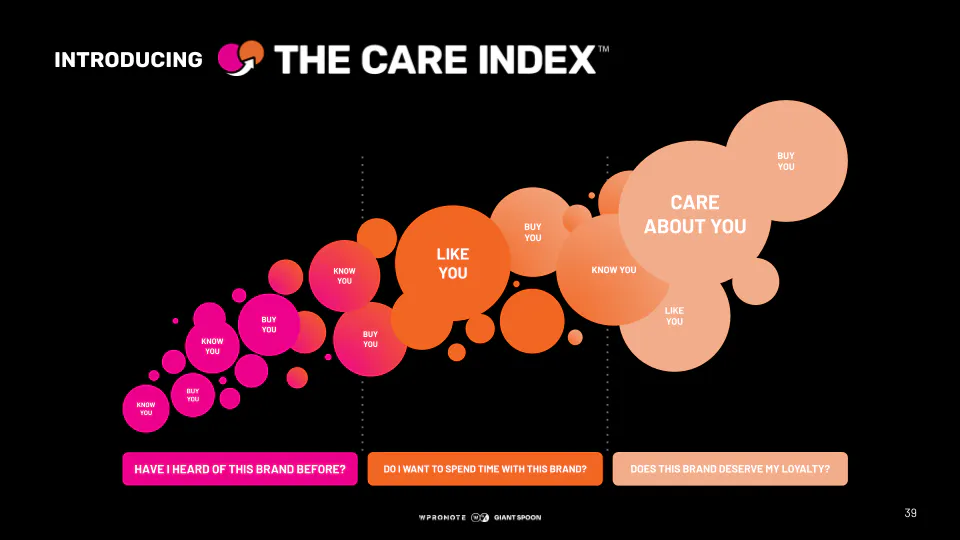
The Wpromote x Giant Spoon Care Index looks at the full relationship. It measures consumer connection and brand affinity across three stages, each built around a question the consumer asks.
- Know asks, "Have I heard of this brand before?"
- Like asks, "Do I want to spend time with this brand?"
- Care asks, "Does this brand deserve my loyalty?"
Why the soap opera is still the model for branded content
Brands were making things people chose to spend time with long before the podcast, the newsletter or the branded film, and the best evidence that audiences will spend time with a brand’s story goes back almost a century — with the soap opera.
The soap opera is named after the people who paid for it. In the 1930s, Procter & Gamble sponsored daytime radio dramas to sell laundry soap, and Ma Perkins ran for 27 years, mostly on Oxydol's dime. Listeners came back every day to find out what happened next, and the soap brand came along with them. Ninety years later, branded content still works best on those terms, when the audience shows up for the story and the brand is welcome to stay.
Want content your audience goes looking for? See how Giant Spoon builds it →
FAQs
What is an example of co-branding?
A Diamond Is Forever's 2025 digital issue with The Cut is one example of co-branding. The natural diamond campaign and New York Magazine's fashion and culture site co-created an issue about natural luxury, with The Cut bringing its readers and editorial voice and A Diamond Is Forever bringing the story of natural diamonds.
What are the types of brand partnerships?
The most common types of brand partnerships are publisher partnerships, athlete and creator partnerships, co-branded products, sponsorships and licensing deals. Each type trades on a different asset, from a publisher's trust to an athlete's following.
What makes brand storytelling authentic?
Authentic brand storytelling starts with a story the audience already cares about and gives the brand a believable role in it. MassMutual's "Stay Ready" campaign connected the real training routines of Flau'jae Johnson, Madison Keys and Christen Press to the financial preparation MassMutual helps women plan for.
Is branded content more effective than traditional ads?
Yes, on brand recall. In a 2016 Nielsen study of more than 100 branded content examples, branded content drove 86% brand recall, compared with 65% for pre-roll ads from the same brands.
How is branded content different from advertising?
Branded content is entertainment or editorial the audience chooses to watch, read or hear, while advertising usually runs alongside the content people chose. GE's podcast "The Message" sat on the iTunes chart next to network and indie shows and reached #1 in 2015.