San Francisco has seen two gold rushes. The first one in 1849 brought prospectors. Now it's brought AI companies—and they're staking claims on billboards instead of mines.
The 101 corridor from SFO into the city? Sold out through May. Top transit hubs? No availability.
Brian Rappaport runs Quan Media Group, an Out-Of-Home (OOH) specialist that ranked #9 on AdWeek's Fastest Growing Agencies list. He's planned campaigns for HubSpot, Skims, and Gemini—brands that know how to own markets.
He's watching a category shift happen in real time:
"If you asked me four years ago what was the big category that burst on the scene, it was online gambling. Now it's AI and B2B brands. Everywhere you look: Anthropic, Rippling, Figma, HubSpot."
Tech brands need physical presence near enterprise buyers and talent. While premium inventory in San Francisco, Austin, and Miami becomes inaccessible, they’re buying credibility before everyone else does.
Key Takeaways
- OOH is a territory play: Brands claim markets before competitors, building credibility digital can't replicate
- The leftover budget trap costs opportunity: OOH enters planning too late to be strategic
- Specialists know what platforms don't: Market memory, unmatched negotiations, relationship-driven pricing, and placement intelligence databases miss
Leftover budget costs opportunity
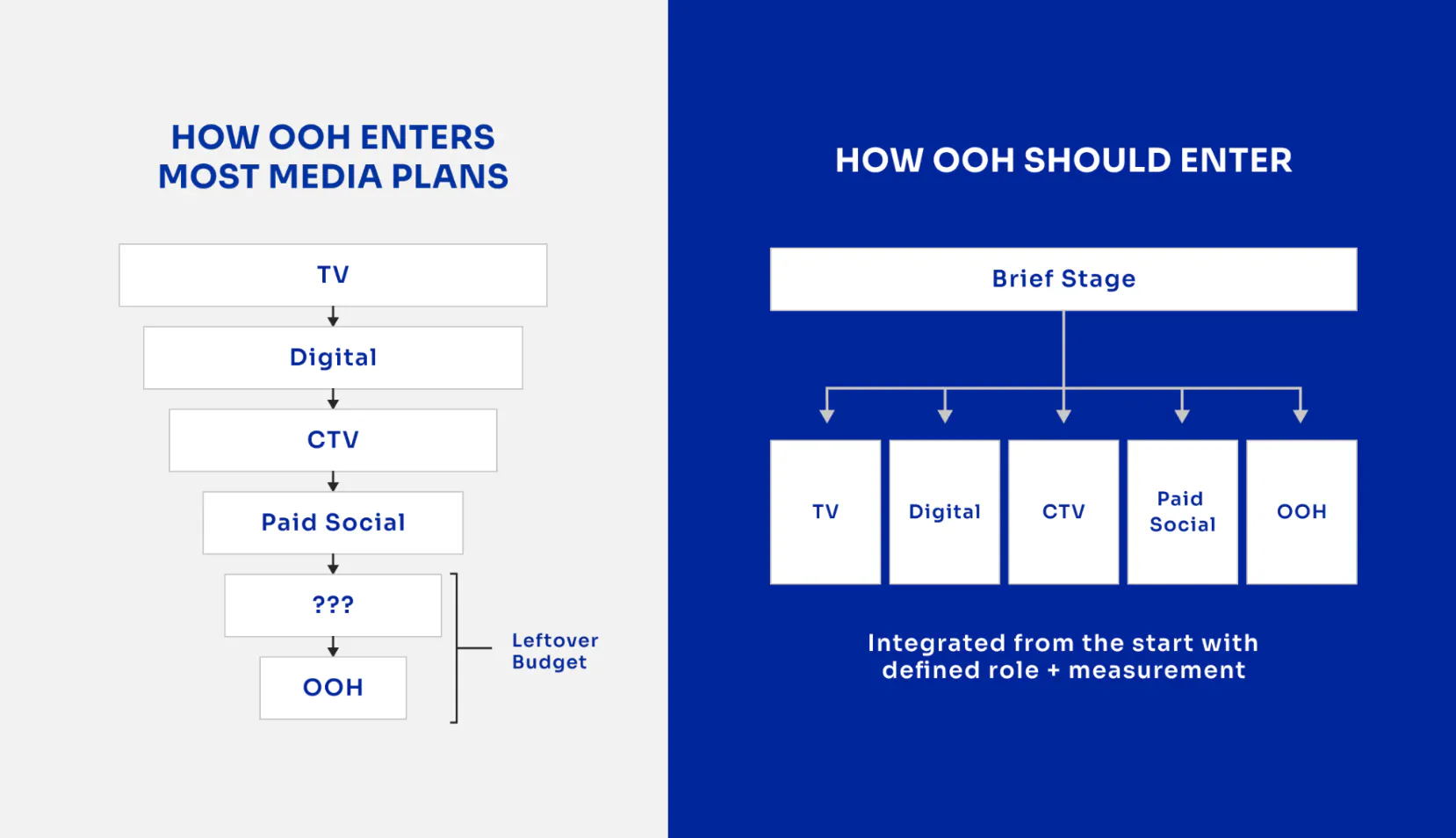
Most media plans follow the same sequence: TV, digital, CTV, paid social. OOH gets what's left. That planning hierarchy made sense when OOH required 6-week print lead times and couldn't be measured, but that era ended years ago.
OOH revenue surpassed $9 billion in 2024, and campaigns now activate in 4-8 weeks with digital formats moving even faster. Measurement covers everything from brand lift to sales lift, giving OOH the trackability it previously lacked.
"OOH shouldn't be looked at as an afterthought, or like we have leftover budget, we should put it there," Rappaport says. "OOH has gotten to the point now where the measurement is there, and there's enough scale and placements, and enough targetability."
Two misconceptions keep budgets from shifting:
- OOH requires massive spend when campaigns as focused as $75K produce statistically significant lift
- OOH channel means billboards and transit when it extends to gym networks, airport activations, sports venue placements.
When OOH enters at the brief stage, campaign objectives shape format, market selection, and measurement before anything's bought.
OOH gets mis-classified, then under-resourced
HubSpot buys virtual mound signage at MLB games and courtside NBA placements. Those units deliver exactly what OOH is supposed to: physical presence in high-attention environments where enterprise buyers gather.
At the holding-company level, those placements get classified as "video" or "sponsorship.” OOH's contribution gets underreported, making next cycle justification harder.
When media budgets get allocated the following year, OOH looks weaker than it performed. The cycle repeats: under-resourced planning, fragmented reporting, limited scale. Brands running OOH as a strategic channel from the brief stage measure it properly. Those briefing it last attribute it incorrectly.
Market memory > platforms
Every major OOH platform surfaces audience index data by unit.
What platforms can't tell you: Unit 2169 on Kent Avenue faces Domino Park and generates organic social content every time a brand activates it. That's market memory built from planning the same neighborhoods hundreds of times.
"Pro athletes have sports agents because they don't know how to negotiate their own contracts. Brands work with out-of-home specialists for the same reason."
Lifetime Fitness operates its own in-gym OOH network across hundreds of locations with digital screens, class naming rights, café placements. Airport security bins, sports venue digital, and even branded pedicabs. All buyable, targetable, measurable, and none of it shows up in a platform search.
Brands that buy based on "prettiest board on Sunset Boulevard" are solving the wrong problem. The better question is where does this resonate in someone's daily path—and the answer usually includes inventory that never surfaces in a dashboard.
Physical presence creates content
RAMP understands OOH as a content engine. They built a 3D receipt wall in New York you could touch. Within hours, employees, passersby, and brand fans posted it organically, turning a physical installation into distributed content.
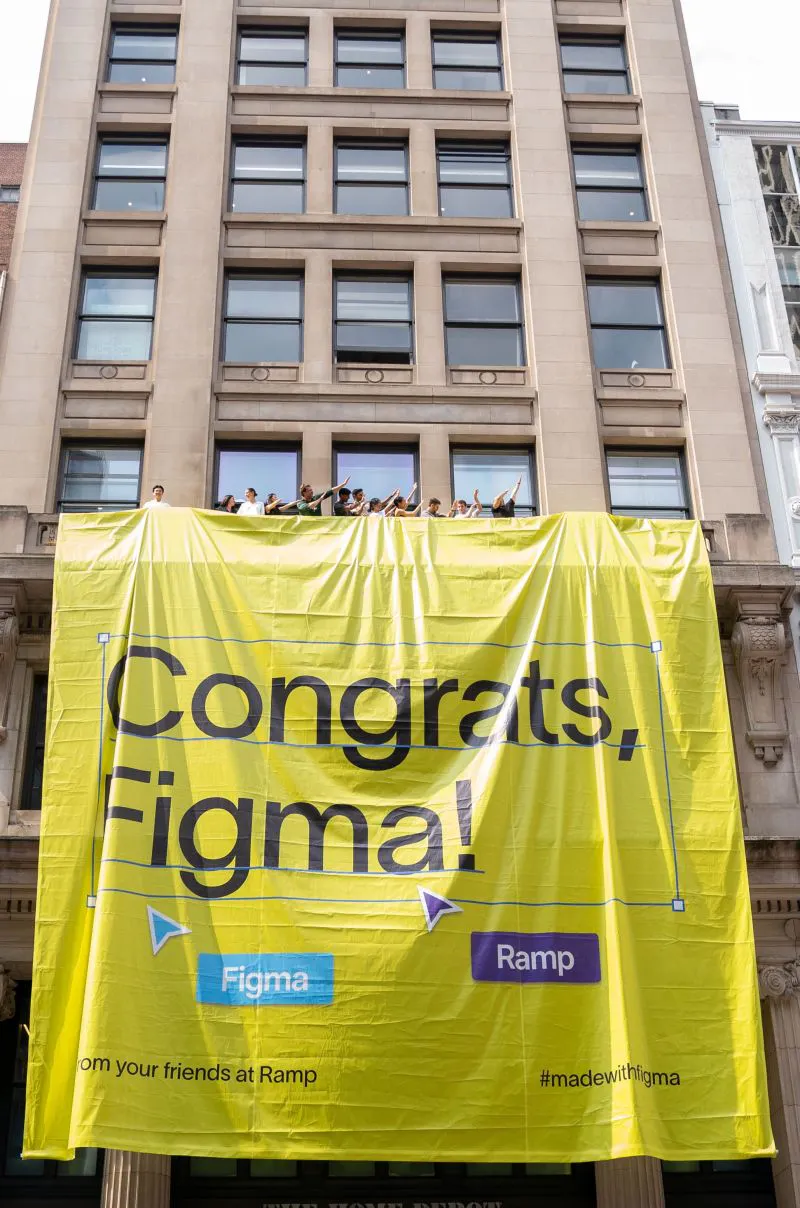
When RAMP wanted to congratulate their “neighbor” Figma’s IPO, they printed and hung a banner in 24 hours, that execution required specialist intelligence: who prints on that timeline, which operator controls that building, how permitting moves faster. Rappaport's team handled it. The banner went up, Twitter lit up, the moment became content.
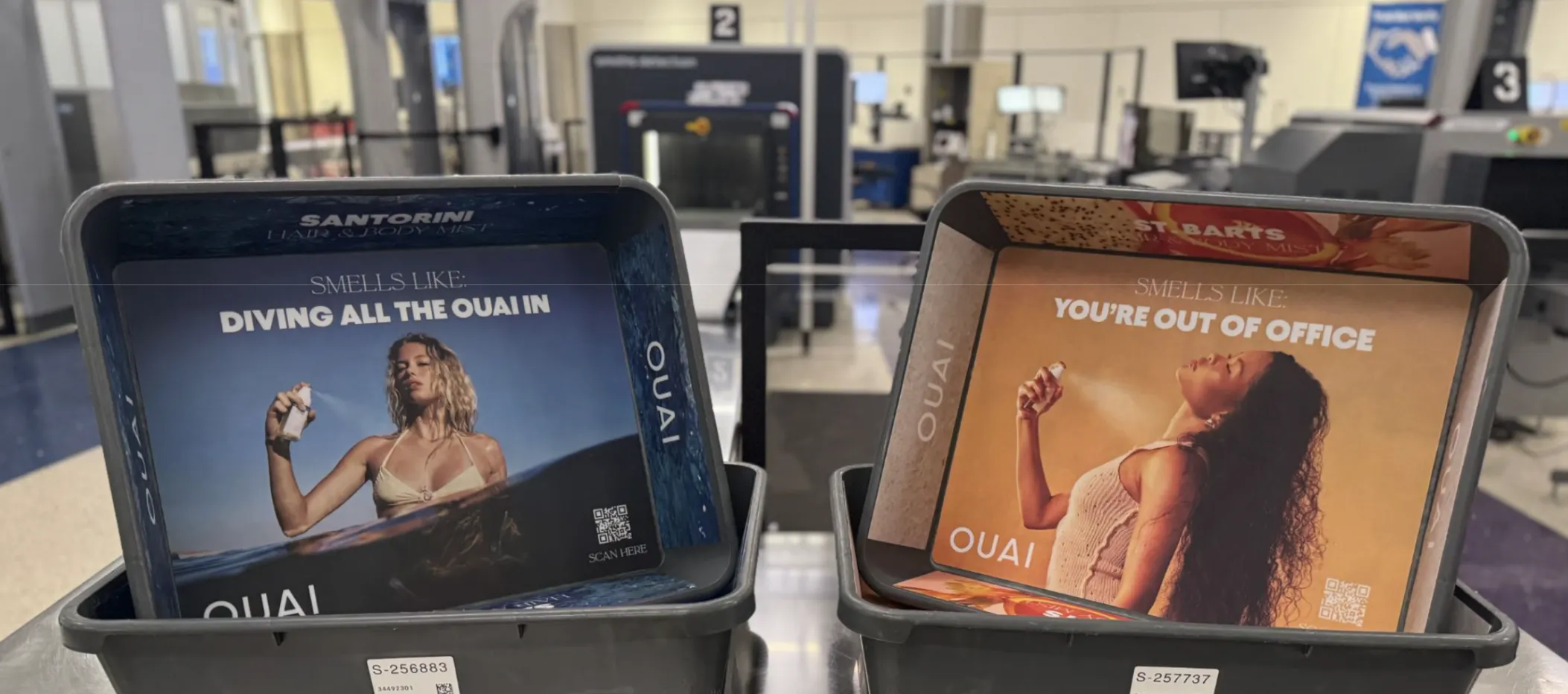
OUAI ran security bins at LAX timed with a planned Instagram moment from founder and celebrity hairstylist Jen Atkin, selecting both format and location because they'd create content rather than impressions.
"Out-of-home is that unblockable channel that lives a second life on social," Rappaport explains. "When you put a brand in the real world, there's credibility, validity."
When OOH, creative, and social strategy align from the start, the channel delivers territory instead of reach.
The window narrows
The financial services industry increased OOH investment by 32.9% in Q2 2025, with Communications up 30.5%. Thirteen advertisers also more than doubled OOH investment in 2024: Stripe, Nike, Hotels.com, Meta. Brands building real-world presence now are doing it before premium inventory becomes inaccessible.
OpenAI selects placements that are visually striking and strategically located in markets where their audience concentrates. Athletic Greens targets neighborhoods and formats that reach their core health-focused demographic without spray-and-pay distribution.
The logic stays consistent throughout: show up where your audience is, in formats that communicate beyond the message itself.